

London is a city full of opportunities, attracting professionals from all over the world. But with its high living costs, it’s important to think about more than just the average salary in London when planning your career or finances. Factors like age, experience, and even gender can all affect how much you earn—and how far your money will stretch in the capital.
In this article, we’ll break down how London salaries differ across groups and stack up against the UK average. Plus, we’ll take a closer look at whether the average London salary really counts as a “good salary” with the city’s high living costs.
What is the average salary in London?
As of October 2024, the average salary for full-time employees in London is £47,455 per year, based on the latest data from the Office for National Statistics (ONS). This is 26.8% higher than the UK-wide average salary of £37,430.
The difference reflects London’s higher cost of living and the concentration of high-paying industries such as finance, technology, and professional services, which contribute to the city’s higher average earnings.
How London salaries compare to the UK averages
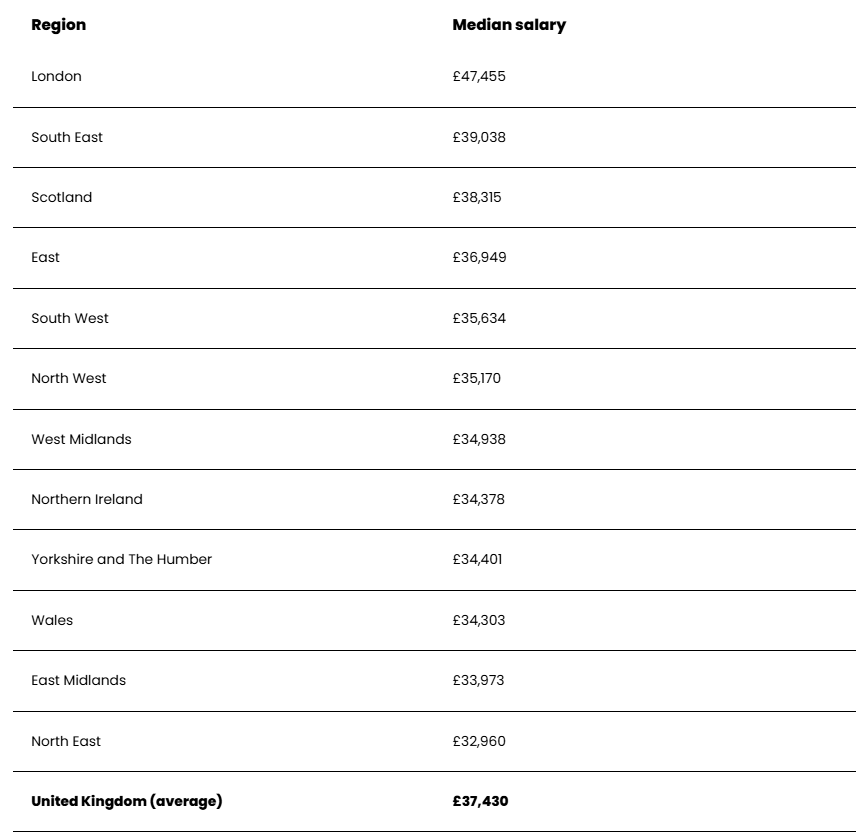
Salaries in London are significantly higher than in most other regions of the UK. The median salary in London is £47,455, far surpassing the national median of £37,430.
Here’s a further comparison of median salaries across the UK:
| Region | Median salary |
|---|---|
| London | £47,455 |
| South East | £39,038 |
| Scotland | £38,315 |
| East | £36,949 |
| South West | £35,634 |
| North West | £35,170 |
| West Midlands | £34,938 |
| Northern Ireland | £34,378 |
| Yorkshire and The Humber | £34,401 |
| Wales | £34,303 |
| East Midlands | £33,973 |
| North East | £32,960 |
| United Kingdom (average) | £37,430 |
As shown, London has the highest median salary by a significant margin, with the next highest region, the South East, at £39,038. Regions like the North East and East Midlands have the lowest median salaries, well below the national and London averages.
This difference in pay highlights the economic disparity between London and other areas, with higher-paying roles and industries concentrated in the capital. However, the cost of living in London is also notably higher, which should be taken into account when comparing salaries across regions.
Average salary in London by age
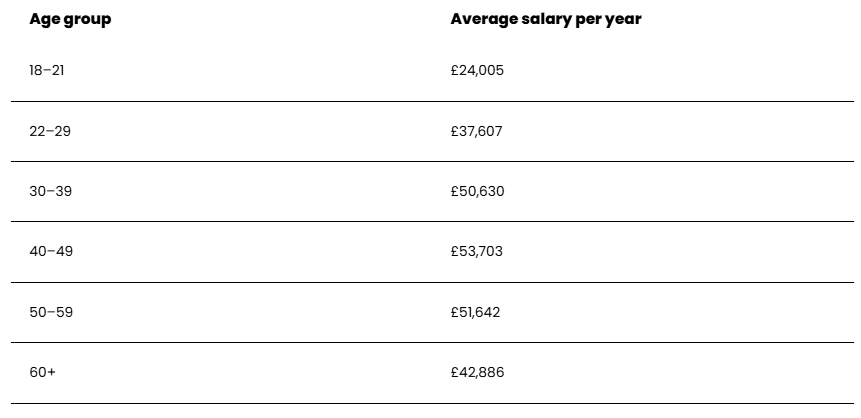
Salaries generally increase as individuals gain experience and take on more responsibilities in their careers. As you progress through different stages of life, your earnings tend to reflect your growing expertise and career milestones. Here’s a breakdown of average salaries in London by age group:
| Age group | Average salary per year |
|---|---|
| 18–21 | £24,005 |
| 22–29 | £37,607 |
| 30–39 | £50,630 |
| 40–49 | £53,703 |
| 50–59 | £51,642 |
| 60+ | £42,886 |
As shown in the table, salaries tend to rise steadily from the early stages of one’s career, with a significant jump between the ages of 30 and 49. The highest average salary is typically reached in your 40s, as this period often marks career advancement, where individuals take on more senior roles or specialize in their field, leading to higher earnings.
After 50, salaries typically remain stable, reflecting the wealth of experience individuals bring to their positions. For those over 60, salaries may decrease slightly, often due to a shift to part-time roles or early retirement.
Overall, the trend shows that age and career progression are key factors in achieving the highest salaries, with experience and seniority being major drivers of salary growth in London.
Related: Average Salary in the UK by Age: See How You Compare
Average salary in London by gender
In London, men earn a median salary of £47,695 per year, while women earn £36,049 per year. This results in a gender pay gap of about 24%, with women earning far less than men on average.
Nationally, the UK figures show men earn a median salary of £40,035, while women earn £34,000, creating a smaller gap of around 15%.
Several factors contribute to the gender pay gap:
- Men are more likely to work in higher-paying industries like finance and tech, which are especially prominent in London.
- Men are more likely to hold senior roles, including executives and management positions, which offer higher salaries.
- Women are more likely to work part-time, but since we’re focusing on full-time salaries, the gap is driven more by career breaks, job roles, and industry representation.
What is the top 10% salary in London?
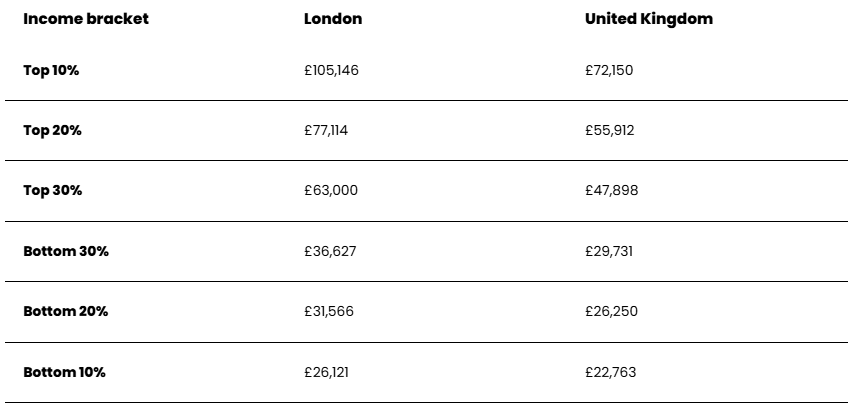
The top 10% of earners in London have a salary of £105,146 or more annually. This is significantly higher than the UK-wide top 10% salary of £72,150.
Here’s a breakdown of top and bottom salaries by income brackets for both London and the UK:
| Income bracket | London | United Kingdom |
|---|---|---|
| Top 10% | £105,146 | £72,150 |
| Top 20% | £77,114 | £55,912 |
| Top 30% | £63,000 | £47,898 |
| Bottom 30% | £36,627 | £29,731 |
| Bottom 20% | £31,566 | £26,250 |
| Bottom 10% | £26,121 | £22,763 |
Related:
How Much Do the Top 1% Earn in the UK?
What Is the Top 1% Net Worth in the UK?
What is a good salary in London?
The average income for full-time workers in London is around £47,455 per year. However, whether this is considered a “good salary” largely depends on your individual circumstances.
To break it down, £47,455 equates to roughly £3,955 per month before tax and £3,024 after tax and National Insurance (NI). This doesn’t take into account other potential deductions like pension contributions or student loan repayments, which can affect your actual take-home pay.
Basic living costs
Living alone in London, especially near central areas, requires a higher salary to cover rent. A one-bedroom apartment in central London may cost from £1,600, excluding bills. Sharing accommodation or living with family can help reduce costs, allowing your salary to stretch further.
If you have children or dependents, living costs rise significantly. For example, a full-time nursery place can cost over £1,500 per month per child, even with government-subsidised childcare hours. Other expenses like public transport, council tax, and daily necessities also need to be factored in. These costs can vary depending on whether you share them with others or bear them alone.
It’s also worth noting that the average first-time home costs around £443,550. With a 10% deposit, you’d need a gross annual income of around £88,711 to afford this, which is nearly double the average income.
Location
Where you live in London plays a big role in determining your living expenses. Living in Greater London tends to be cheaper compared to inner London, where rents and general living costs are higher. This is an important consideration when thinking about your salary’s purchasing power.
Defining a comfortable lifestyle in London
Your personal definition of a comfortable lifestyle also plays a role: some may define comfort as the ability to save, travel, and enjoy leisure activities, while others may prioritise maintaining a simple lifestyle with minimal savings.
Is the average London salary good?
The average London salary of £47,455 might be good for someone sharing accommodation or living in more affordable outer boroughs. However, it might not be enough for a comfortable lifestyle for a family with children or people living in higher-cost areas.
Ultimately, a good salary in London is subjective and depends on your lifestyle, family situation, housing choices, and financial goals.
How can I increase my income?
In London, where the cost of living is high, finding ways to boost your income is crucial. While salaries generally increase with experience and age, there are plenty of strategies you can use to increase your income at any stage of your career. Here are some effective methods to consider:
- Network, network, network
One of the best ways to boost your income is by expanding your professional network. Attend industry events around London, where you can meet potential employers, collaborators, or people who know about upcoming opportunities. Networking also helps you stay informed about new job roles or freelance gigs that could increase your income. - Refresh your CV and LinkedIn profile
If you haven’t updated your CV in a while, it’s time for a refresh. Make sure your skills and experience are current and tailored to your career goals. Don’t forget to update your LinkedIn profile too, as many employers and recruiters use LinkedIn to find candidates. A polished and well-optimised profile could attract new opportunities and higher-paying roles. - Invest in skill development
Learning new skills is an excellent way to increase your earning potential. If you cannot afford a formal course or a degree, consider taking online courses or certifications that align with in-demand industries, such as tech or data analysis. Platforms like The Open University and LinkedIn Learning offer many affordable or even free options. Improving your skills makes you a more attractive candidate for promotions or higher-paying job roles. - Ask for a pay rise
If you’ve been in your current role for a while and have delivered good results, it might be time to ask for a pay rise. Do your research to understand the average salary for your role in London, and come prepared with evidence of your achievements. If the answer is no, ask for feedback and schedule a follow-up meeting to revisit the conversation in a few months. - Consider a job change
If you feel like you’ve reached a salary ceiling in your current job, exploring new roles can help you earn more. London’s job market is large, and job switching can often bring a bigger pay increase than staying in the same position. In fact, research suggests that ‘job hoppers’ earn 31% more than average workers. Workers who frequently change jobs earn higher salaries and accumulate larger pension pots compared to their counterparts who stay longer in roles. - Side hustles and freelancing
Freelancing or taking on a side hustle is an effective way to supplement your income. There are numerous opportunities in fields like writing, graphic design, social media management, or tutoring. Platforms like Upwork or Fiverr can help you find clients, and in-demand skills can allow you to earn extra income outside of your 9-to-5 job. If you have a talent or passion, turning it into a side business can bring in additional money while providing flexibility.
Related: 17 Unique Ways to Make Extra Money in London
Conclusion
The average salary in London is £47,455, which is 26.8% higher than the UK average of £37,430. However, whether it’s considered a “good” salary depends on factors like lifestyle, location, and family responsibilities.
For individuals living in outer boroughs, sharing housing or with fewer financial commitments, this salary could comfortably cover basic needs and offer room for some savings or leisure activities.
However, for those living in central London or with dependents, this salary likely falls short of providing a comfortable lifestyle. High housing costs, childcare expenses, and everyday living expenses in these areas can quickly add up, making it more challenging to meet financial goals without a higher income.
Ultimately, whether the average salary of £47,455 works for you depends on your circumstances, including your financial obligations and housing choices.
