
How does your salary measure up to others in your age bracket? Whether you’re just starting out or well into your career, knowing the average UK salary by age for full-time employees can offer a valuable benchmark.
In this guide, we break down the median full-time salary across different age brackets using the latest data from the Office for National Statistics. You’ll see how earnings typically grow with age, when they tend to peak, how gender affects pay, and what it takes to be among the top earners in your age group.
Key insights
- The average (median) full-time salary in the UK is £37,430.
- Full-time workers aged 40–49 earn the most (£42,154), while those aged 18–21 earn the least (£22,001).
- London and the South East not only pay the highest but also have the strongest salary growth from early to mid-career.
- Men earn around 18% more than women on average (£40,035 vs £34,000), with the gap widening significantly after the age of 30.
What is the average salary in the UK?
The average full-time salary in the UK is £37,430. This figure, published by the Office for National Statistics (ONS) in its latest Annual Survey of Hours and Earnings (ASHE), represents the median wage — the midpoint in the salary range, with half of workers earning more and half earning less.
In contrast, the mean salary is higher, at £45,836. However, it is skewed upward by a small number of very high earners. The median provides a more realistic picture of what typical full-time workers in the UK earn and is used throughout this article for consistency and an accurate representation of the average annual salary.
What is the average UK salary by age?
Earnings tend to increase with age as people gain experience, take on more responsibilities, and move into higher-paid roles. Salaries typically peak in mid-life before levelling off or declining slightly later in life.
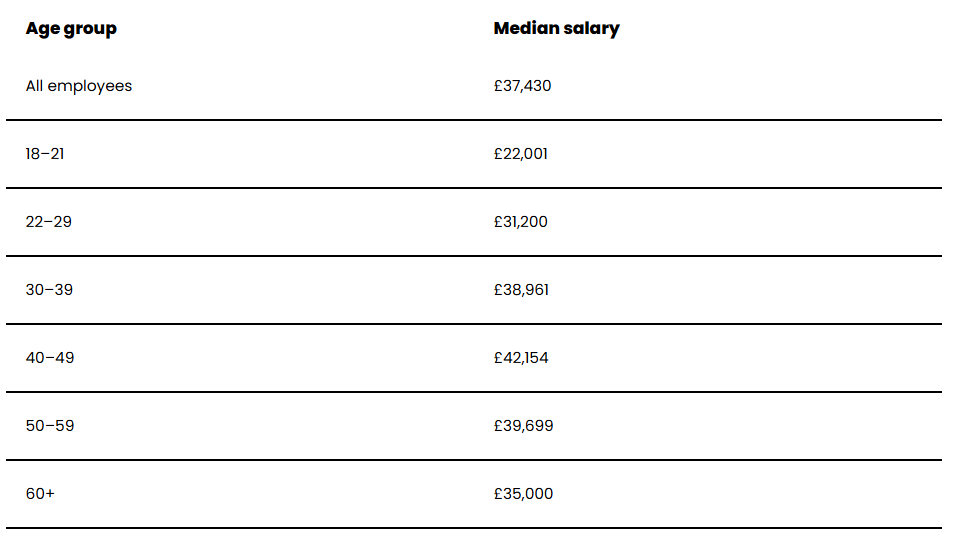
Workers in their 40s currently earn the most on median, reflecting the culmination of career development, seniority, and accumulated experience. Salaries remain relatively high in the 50s before dropping after 60, which may be due to a mix of part-time work, phased retirement, or career changes later in life.
Although average earnings fall after age 60, they remain close to or above the national median, indicating that many older workers continue in well-paid positions.
Related: Is £50K a Good Salary in the UK?
Average UK salary by age and region
Median salaries vary across UK regions, as shown in the table below. It highlights how earnings grow by age group and from early to mid-career.
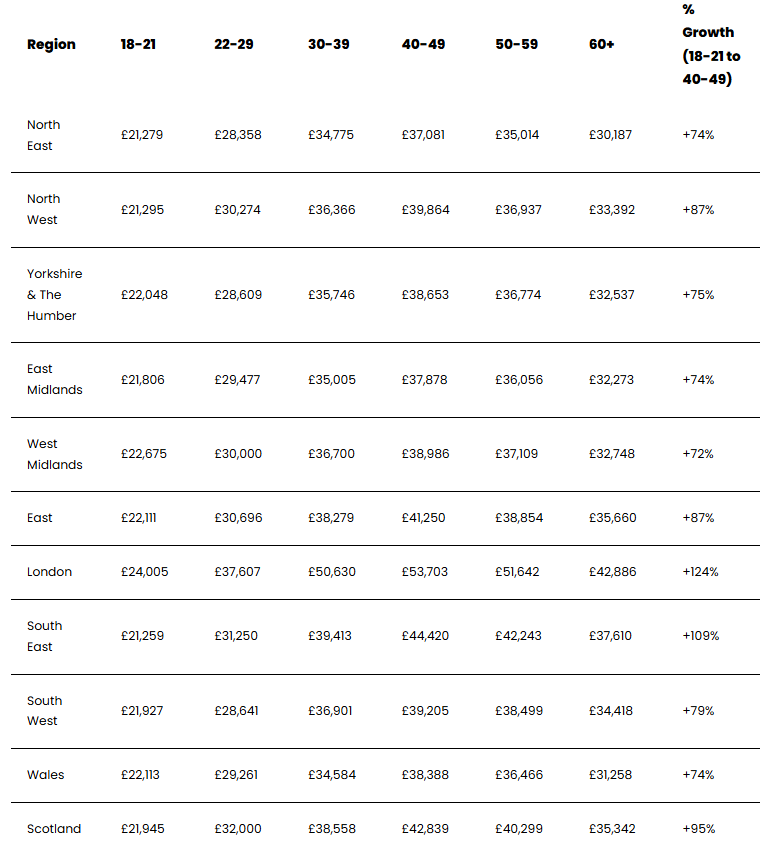
The data shows clear differences in median salaries across UK regions and age groups. These differences reflect local economies, industries, and living costs:
- London and the South East have the highest median salaries at every age. This matches their higher living costs and concentration of top industries.
- Salary growth from early career (18-21) to mid-career (40-49) is strongest in London (+124%) and the South East (+109%). This shows faster earnings progression there.
- The North East has the lowest median salaries and slower growth (+74%). This highlights regional pay gaps across the UK.
- Salaries peak around age 40-49 in all regions, then dip slightly for ages 50-59 and 60+. This likely reflects retirement, part-time work, or fewer senior roles.
- Scotland and the East have solid mid-career salaries and strong growth (+95% and +87%). This shows competitive pay outside London.
Related: Average Salary in London: Enough to Live Comfortably?
Average UK salary by age and gender
A gender pay gap exists across all age groups and becomes more significant with age. While early career salaries are relatively similar between men and women, a noticeable gap opens up after the age of 30.
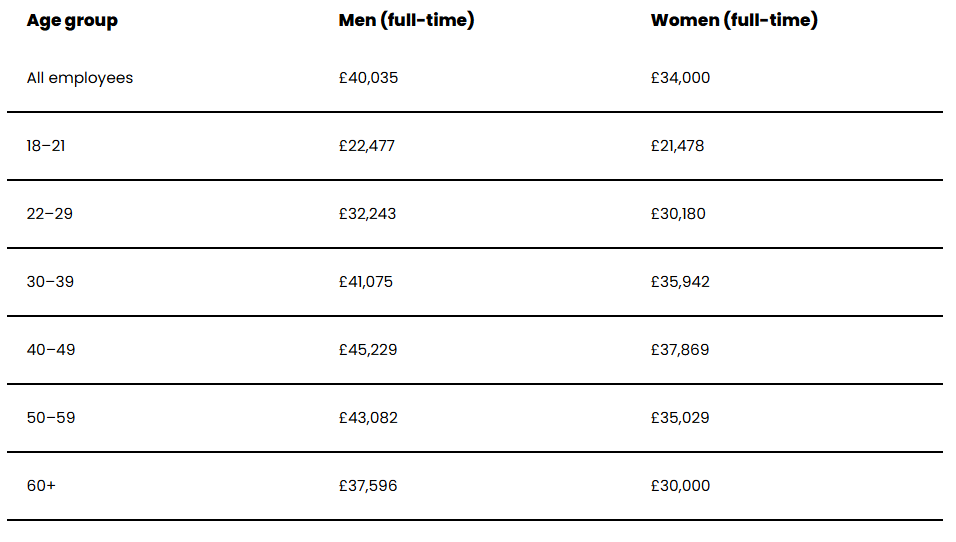
The gap between male and female earnings widens most significantly after age 30. This can be attributed to factors such as maternity leave, part-time work, occupational segregation, and underrepresentation in higher-paying leadership roles. By the 40–49 age group, men are earning over 19% more than women on average.
Top UK salaries by age: What do the highest earners make?
While median salaries provide a useful benchmark, some individuals earn far more than their peers. To be in the top 10% or 20% of earners, salaries must significantly exceed the age-specific median.
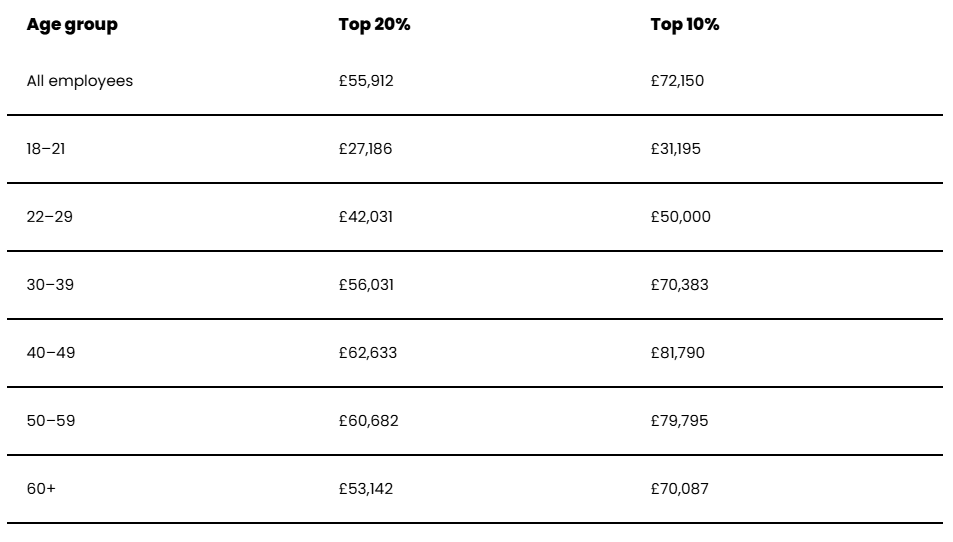
To be in the top 10% of earners in your 40s, your salary needs to exceed £81,790. These roles are often found in senior management, specialised technical professions, or highly competitive industries such as finance, law, tech, and consulting.
The widening gap between the median and top earners also highlights how a relatively small group can disproportionately influence mean salary figures.
Related: How Much Do the Top 1% Earn in the UK?
Context: Sectors, regions and the broader picture
Salary differences aren’t just about age or years of experience — they’re also shaped by your industry, location, and sector.
- Industry matters: Roles in finance, tech, law, and engineering often command higher pay due to demand, specialisation, and profit margins. In contrast, sectors like retail, hospitality, and care typically offer lower wages and slower salary growth.
- Location plays a role: London and the South East consistently report the highest average salaries, reflecting the concentration of high-paying industries and larger employers. Regions like the North East or East Midlands tend to have lower averages, partly due to cost of living and job mix.
- Sector impacts earnings: The private sector usually offers higher salaries, especially in commercial or performance-driven roles.
These factors significantly shape what you can earn, so they’re important to consider when comparing your salary against national or age-based averages.
Average UK salary by age: Where do you stand?
Knowing how your salary compares to the median for your age group can be insightful, but it’s important to remember that many factors influence your income.
Falling below the median doesn’t necessarily mean you’re underpaid. Your industry, location, role type, and working hours all influence your income. But if you’re aiming to boost your earnings, you might consider:
- Gaining new qualifications or certifications
- Moving into a higher-paying industry or specialism
- Taking on more responsibilities or leadership roles
- Negotiating a salary increase or exploring new job opportunities outside your current company
- Starting a side hustle or other ways to supplement your income