

When it comes to saving your hard-earned money, two popular options in the UK stand out: Premium Bonds and Individual Savings Accounts (ISAs). Both options are tax-efficient and offer distinct benefits, but which one is better for growing your savings?
In this article, we will break down how each option works, highlight the differences between them, and help you decide which is the best fit for you. We will also explain how you can start investing in either of these savings vehicles.
How Premium Bonds work
Premium Bonds are a unique savings product offered by the UK government through National Savings & Investments (NS&I). Unlike traditional savings accounts, Premium Bonds don’t earn interest. Instead, bondholders are entered into a monthly prize draw, offering tax-free cash prizes ranging from £25 to £1 million.
Each Premium Bond costs £1, with a minimum investment of £25, and you can invest up to £50,000. However, it’s important to note that Premium Bonds don’t guarantee a return on your investment. Whether you win a prize is purely down to luck, as there’s no fixed interest rate.
The premium bond prize rate indicates the amount that NS&I allocates for prizes. As of April 2025, this rate is set at 3.8%. For context, the highest easy-access Cash ISA rate currently exceeds 4.5%. This prize rate affects the total value of prizes awarded each month.
Winnings are tax-free, making Premium Bonds an appealing option for those seeking a blend of excitement and potential returns in their savings strategy.
What are your odds of winning Premium Bonds?
The odds of any Premium Bond winning a prize in a monthly draw are 1 in 22,000. Your chances of winning depend on the premium bond prize rate and the amount you’ve invested. The higher the prize fund rate, the more prizes NS&I will allocate in each draw.
Related: Why Do I Never Win The Lottery: Understanding Your Odds
How ISAs Work
An Individual Savings Account (ISA) is another popular savings and investment option. It is designed to help UK residents save money in a tax-efficient way. There are several types of ISAs, but they all share one key feature: the interest, dividends, or capital gains earned in an ISA are tax-free.
Here’s a breakdown of the different types of ISAs:
- Cash ISAs: The most straightforward type of ISA, offering a fixed or variable interest rate on your savings. The returns are generally lower than other ISAs but come with minimal risk.
- Stocks and Shares ISAs: These allow you to invest in the stock market. Returns can be higher, but there’s also the potential for more risk. S&S ISAs are better suited to those with a longer-term investment strategy and a tolerance for market fluctuations.
- Lifetime ISAs (LISAs): This type of ISA is designed for long-term saving, either for buying a first home or for retirement. You can receive a government bonus of 25% on your savings, up to a limit of £4,000 per year.
- Innovative Finance ISAs: These are used for peer-to-peer lending, offering potentially higher returns but with greater risk.
The ISA allowance allows you to contribute up to £20,000 in total each tax year across all types of ISAs. While the interest rates or returns in ISAs can vary, they are generally more predictable.
Related: How to Maximise Your ISA Allowance This Tax Year
Premium Bonds vs ISA: What are the differences?
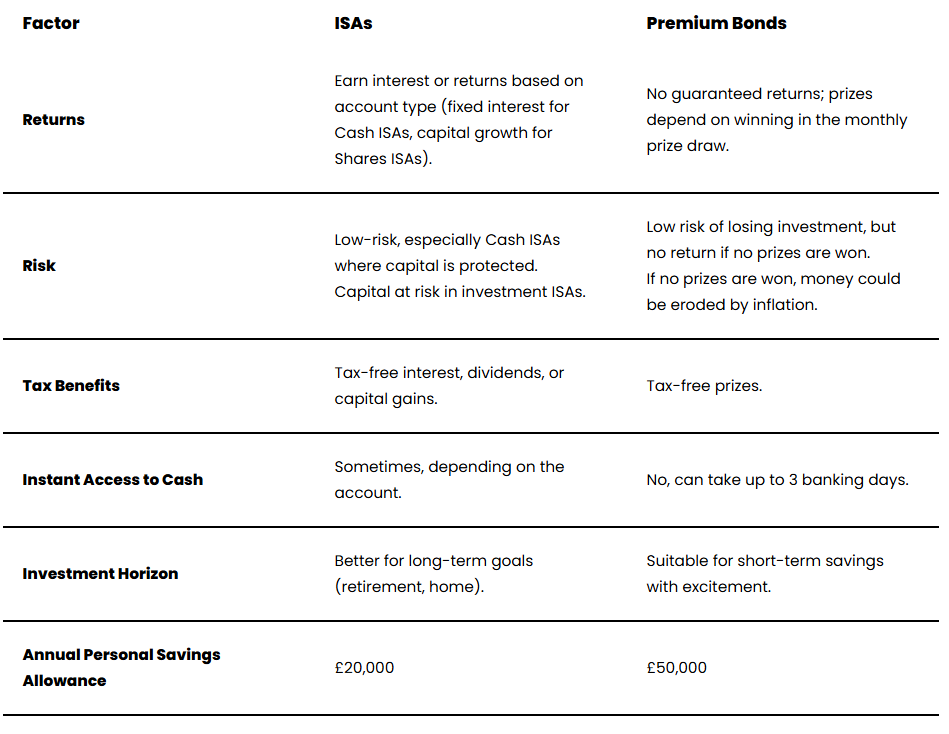
Will I get better returns from Premium Bonds or an ISA?
When it comes to returns, both Premium Bonds and ISAs offer different types of opportunities, but neither guarantees high returns.
Premium Bonds: There are no guaranteed returns with Premium Bonds. The current annual prize fund rate is 3.8%. But since it’s based on a prize draw, you could end up with nothing at all. Premium Bond prizes range from £25 to a £1 million jackpot, but winning is entirely based on luck. If you don’t win, your money doesn’t grow.
Cash ISA: While Cash ISAs offer a guaranteed return, they traditionally provide relatively low interest rates, with many accounts offering rates below 1%. As a result, the savings rates were lower than inflation, meaning your money could devalue over time. However, following recent interest rate hikes, there are now Cash ISAs offering much higher interest rates — the current best Cash ISA rates go up to around 4.5%. These accounts guarantee a fixed interest rate on your savings, meaning you’ll earn a predictable return over time. While still modest, these rates are more competitive than in previous years and can help protect your savings from losing value due to inflation.
Stocks and Shares ISA: If you’re looking for higher potential returns, Stocks and Shares ISAs allow you to invest in the stock market. While they offer the opportunity for capital growth, the returns are not guaranteed. You could lose money if you sell your investments when markets are down. Stocks and Shares ISAs tend to be a good option for long-term investors (usually 5 years or more) who understand the risks of investing and are comfortable with market fluctuations.
Things to consider when choosing between ISAs and Premium Bonds
When deciding between Premium Bonds and an ISA, there are several factors to consider:
- Financial goals: If you’re saving for the long term, such as retirement, buying a home, or funding a child’s education, an ISA is likely the better choice. The guaranteed returns from Cash ISAs or the growth potential in Stocks and Shares ISAs make them more suitable for long-term goals. Premium Bonds are better suited for short-term savings, where the appeal lies in the possibility of occasional windfalls rather than stable, predictable growth.
- Risk tolerance: If you prefer guaranteed returns, ISAs are the safer option. Cash ISAs provide fixed interest rates, ensuring a predictable return. Stocks and Shares ISAs offer the potential for higher returns through market investments, but come with more risk of market fluctuations. On the other hand, Premium Bonds offer no guaranteed returns—your “return” comes from the chance to win prizes in a monthly draw, and you could end up with nothing at all. Premium Bonds may be more suited for those who enjoy the excitement of the lottery-like prize system and don’t mind the risk of earning nothing.
- Access to your money: With Premium Bonds, you can access your money easily, as there are no fixed terms or notice periods. However, if you haven’t won any prizes, your money will not grow, and inflation may erode its value. In contrast, Cash ISAs offer easy access to your money in most cases, though some types (like fixed-rate ISAs) may restrict withdrawals. Stocks and Shares ISAs are more suitable for long-term goals as they tend to involve higher levels of investment risk and may require you to lock your money away for several years to ride out market fluctuations.
Premium Bonds vs ISA: Can I invest in both?
Yes! You can invest in both Premium Bonds and an ISA at the same time, as long as you stay within the respective limits. Many people choose to do this, especially if they want to diversify their savings. For example, you could invest in Premium Bonds for the thrill of the prize draw while using an ISA to earn guaranteed interest or returns on a portion of your savings.
This approach allows you to balance the excitement of Premium Bonds with the stability of an ISA, depending on your individual financial goals.
How to invest in Premium Bonds or ISAs
If you’re ready to put your money to work, here’s how to invest in Premium Bonds or open an ISA:
Premium Bonds
Visit the NS&I website to set up an account and purchase Premium Bonds online. The minimum investment is £25, and you buy in £1 increments. Once your purchase is confirmed, your bonds will be automatically entered into the monthly prize draw. You can fund your account using a bank transfer or set up a regular payment if you want to invest monthly.
Cash ISA
Choose a provider such as a bank, building society, or an app-based platform — but be sure to compare interest rates first. For example, the Plum app currently offers a Cash ISA with a competitive rate of 5.68% for the first 3 months, then 3.54% thereafter. To open a Cash ISA, complete the online application, verify your ID, and link your bank account. Once set up, you can transfer funds up to your ISA allowance and start earning tax-free interest.
Stocks and Shares ISA
Signing up for a Stocks and Shares ISA is similar to opening a Cash ISA; you complete an online application, verify your ID, and transfer your money into the account. The key difference is that instead of leaving your money as cash, you’ll need to choose how to invest it. For beginners, funds such as ETFs are a good option, as they spread your investment across many companies and reduce the need to research individual stocks. Platforms like InvestEngine make this easy, offering both managed portfolios (where they choose investments for you) and DIY options. Once your account is set up, you can transfer money and start investing within your annual ISA allowance.
Related: Top Investment Apps for Beginners
Conclusion
Both Premium Bonds and ISAs can be excellent options for saving money tax-efficiently.
Premium Bonds offer the excitement of potentially winning tax-free prizes, but they come with the risk of earning little to no return. On the other hand, ISAs provide more predictable returns, especially with cash ISAs, and are a safer option for those looking for guaranteed growth. It’s also worth noting that the current top Cash ISA rates are higher than the premium bond price fund rate. Ultimately, the choice depends on your financial goals, risk tolerance, and how much money you want to invest.
If you’re looking for guaranteed returns and a stable option for long-term savings, an ISA is likely the better choice. However, if you’re after a bit of excitement and a chance to win a big prize, Premium Bonds may be the perfect addition to your savings strategy. And remember, you don’t have to choose one—investing in both can give you the best of both worlds.
This post may contain affiliate or referral links. If you sign up through these links, we may earn a small commission at no extra cost to you, supporting our content creation.