

The money dance is a lively and meaningful wedding tradition found in various cultures. It symbolises guests offering financial support and well wishes to the couple as they begin their new life together. This joyful custom adds energy and unity to the celebration.
Curious about its history, significance, and how to include it in your own wedding? Let’s explore this unique tradition and everything you need to know about the money dance wedding tradition.
What is a money dance at a wedding?
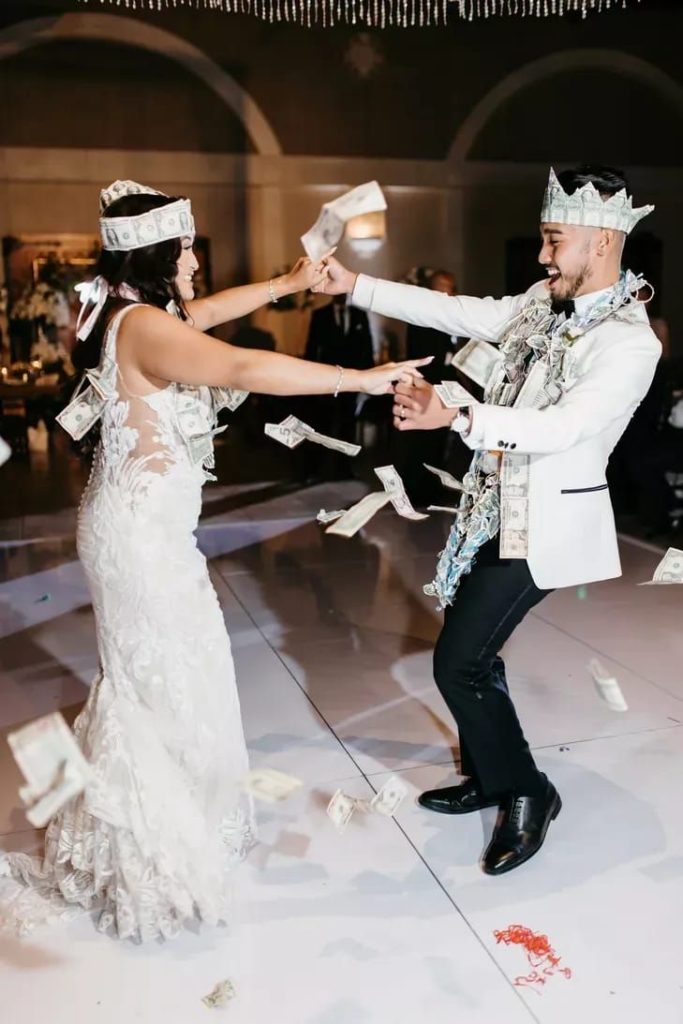
The money dance is a cherished wedding custom in many cultures. It’s a lively reception moment with music, dancing, and guests giving money to the couple. In some weddings, bills are tossed, while in others, they are pinned to the bride’s dress or placed in a basket.
From Eastern Europe to Latin America, Nigeria, and even the US, this tradition adds a joyful and engaging element to the celebration. Each culture has its own unique version of the money dance wedding tradition. However, the underlying purpose is the same: to support the couple financially and wish them prosperity as they begin their married life.
What is the meaning of the money dance?
The money dance at weddings is more than just a fun moment at the reception. It’s a symbolic way for wedding guests to offer monetary gifts and support the couple’s new life together. This interactive tradition allows family members and friends to wish the newlyweds good fortune while helping them financially as they start married life. It’s also a great way to create a festive and memorable atmosphere on their special day.
Related: 8 Cute & Polite Ways to Ask Money as a Wedding Gift
What is the origin of the money dance wedding tradition?
The origins of the money dance vary across cultures, but the practice is believed to have started in Eastern Europe. In countries like Poland and Ukraine, it’s known as a beloved tradition where guests pin money to the bride’s gown or place it in a special apron during the dance.
Over time, this custom spread to other parts of the world, including Latin America, Nigeria, and the United States. Each culture adds its own unique touches, but the essence remains the same: a vibrant tradition that combines celebration with financial support for the new couple.
What cultures do the money dance at weddings?
The money dance at weddings is a beloved tradition in many cultures worldwide. Guests often toss or pin money to the couple’s clothes during a special dance. This gesture symbolises good luck and offers financial support to the couple. While the essence of the tradition remains the same, its details can vary even within the same country or cultural group. Let’s explore examples of how this custom is practiced around the world.
Latin America: "El Baile Del Dólar"
In several Latin American countries such as Colombia, Venezuela, and Ecuador, the money dance is known as “El Baile Del Dólar”. During this lively tradition, guests pin dollar bills or large bills onto the couple’s attire while they dance to an upbeat song. The money collected helps the couple with wedding expenses, a honeymoon, or other financial needs as they begin their married life.
Greece: The Greek Money Dance
Like many Latin cultures, a Greek wedding will often include a money dance, where friends and family throw dollar bills at the couple as they dance. This tradition originated in villages in Greece, where guests would pin money on the bride as she danced.
Today, this custom is often seen at Greek American weddings, but it is less common in Greece itself. The lively atmosphere of the dance and the act of throwing money symbolises well-wishes for the couple’s financial prosperity and happiness in their new life together.
Philippines: "Sayaw ng Pera"
In the Philippines, the money dance, or “Sayaw ng Pera” (Dance of Money), is an important and cherished tradition. As part of the tradition, guests dance with the newlyweds while pinning money onto their clothing. The money is a gift to help the couple with their wedding expenses or to support them as they start their life together.
Poland: Apron Dance
In Poland, the money dance is a beloved tradition that takes place after the oczepiny ceremony (the unveiling of the bride). During this tradition, guests line up to dance with the bride, offering money to the couple. The money is collected into a special apron held by the bride’s father or a close family relative.
This custom symbolises financial support for the couple’s new life together and adds a fun, communal moment to the wedding celebration. Lively polka music often accompanies the Polish money dance wedding tradition.
West Africa: Money Spraying
In West African countries like Nigeria and Ghana, the tradition of money spraying is a key part of wedding celebrations. As the bride and groom dance, guests step forward with large amounts of cash and start flinging money into the air, showering the couple with bills. The money is meant to symbolise good fortune and the guests’ affection for the couple.

United States: "Dollar Dance"
The money dance, also called a “dollar dance,” is a common tradition at weddings in the United States, particularly in certain regions and among specific ethnic groups. For instance, Cajun weddings, which originate from the French-speaking Acadian people of Louisiana, often feature this custom as a lively and joyful part of the celebration.
Guests line up to dance with the bride or groom while pinning cash on their clothing. This gesture helps support the couple’s new life together. Its popularity can vary by location and personal preference.
How to have a money dance at your wedding
Incorporating a money dance into your wedding can be a memorable and fun way to honour tradition and engage your guests. Here’s how you can include it seamlessly:
- Plan ahead: Discuss the idea with your partner and ensure it fits with your cultural backgrounds or personal preferences. Share your plans with close family members and the wedding party to gather support and ideas.
- Choose the right music: Select an upbeat song that resonates with your style or culture. Traditional tunes work well, but modern or sentimental songs can add a personal touch. Discuss with your wedding DJ or band to ensure a smooth transition into the money dance.
- Announce the tradition: Let your guests know about the money dance, especially if it’s unfamiliar to them. The best man, maid of honour, or a DJ can introduce it, explain its significance, and share how guests can participate.
- Clarify participation is optional: If you’re having a multicultural wedding where some guests may not know this tradition, it’s helpful to clarify that participation is completely optional. This ensures everyone feels comfortable and allows the dance to remain a joyful and inclusive part of the celebration without financial pressure on guests.
- Prepare supplies: Provide a basket, hat, or other container for collecting monetary gifts. Alternatively, ensure you have pins or ribbons if you’d like guests to pin the money to your attire.
- Add personal touches: Incorporate elements unique to your relationship, such as favourite songs, special dances, or symbolic gestures. These details make the money dance feel more meaningful and personal.
Related: Creating a Wedding Registry for Cash: A Complete Guide
Conclusion
The money dance is a lively tradition celebrated in cultures around the world. During the dance, guests pin or toss money onto the couple. While the specifics of the tradition may vary across cultures and weddings, its purpose remains the same: to offer financial support for the couple’s new life together and wish them prosperity.
